
Automatic roster generation: documented, verifiable AI.
The ward’s monthly roster in a few minutes: compliant with regulations, fair in on-call shifts (guardia) and nights, reviewable before publication. And you can read how it works: the method is published.
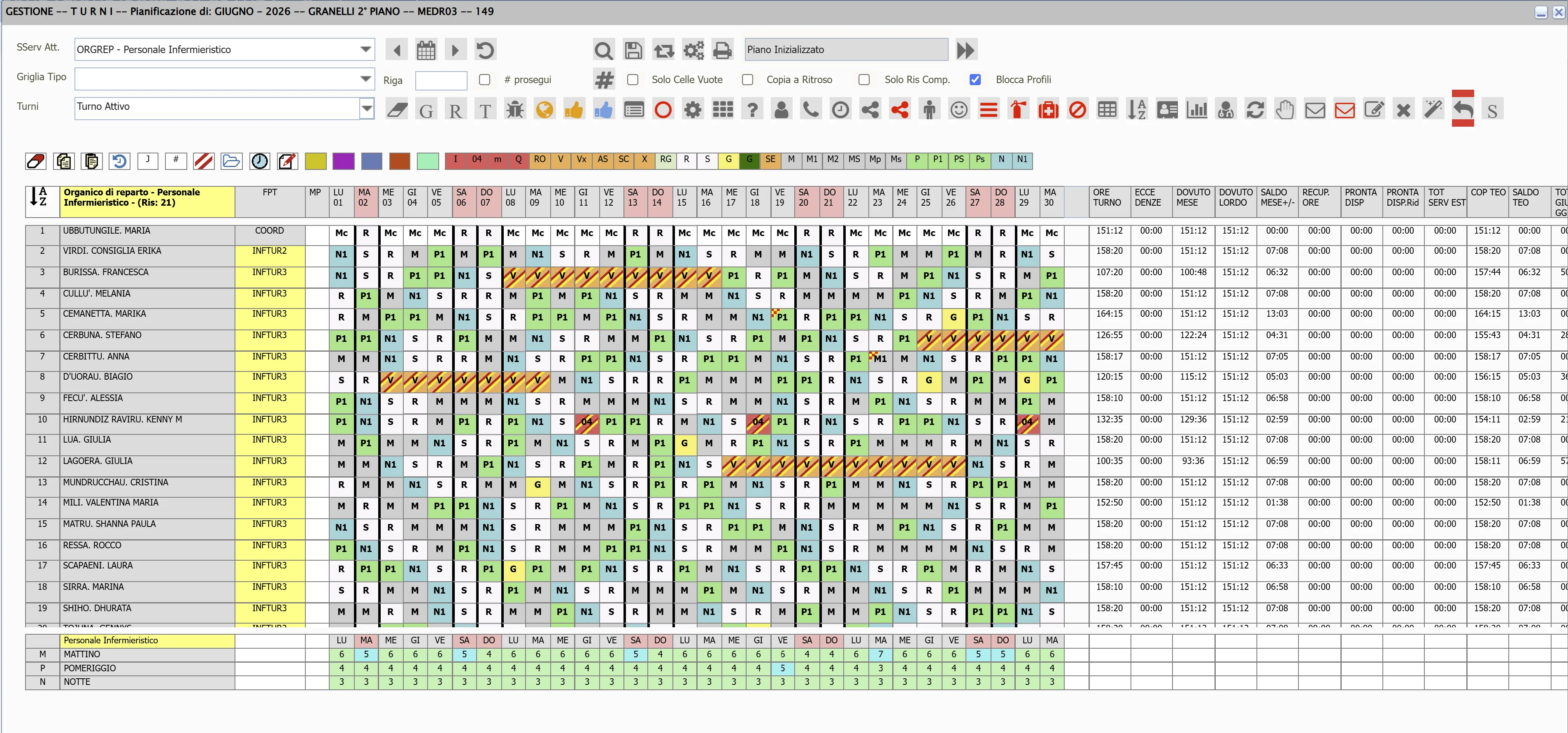
The ALISEO ES engine generates the ward roster in a few minutes from staffing needs (MIN/OPT/MAX), absences, competencies, contracts and preferences: regulatory constraints are inviolable (hard), while fairness and preferences are balanced (soft). It is documented AI, born from a research project with the University of Udine promoted and funded by Windex: a Simulated Annealing algorithm, peer-reviewed publication (2023, open access), tested on the international INRC benchmarks. The result can be reviewed and edited before validation: the engine proposes, the planner decides.
Last updated: 5 July 2026
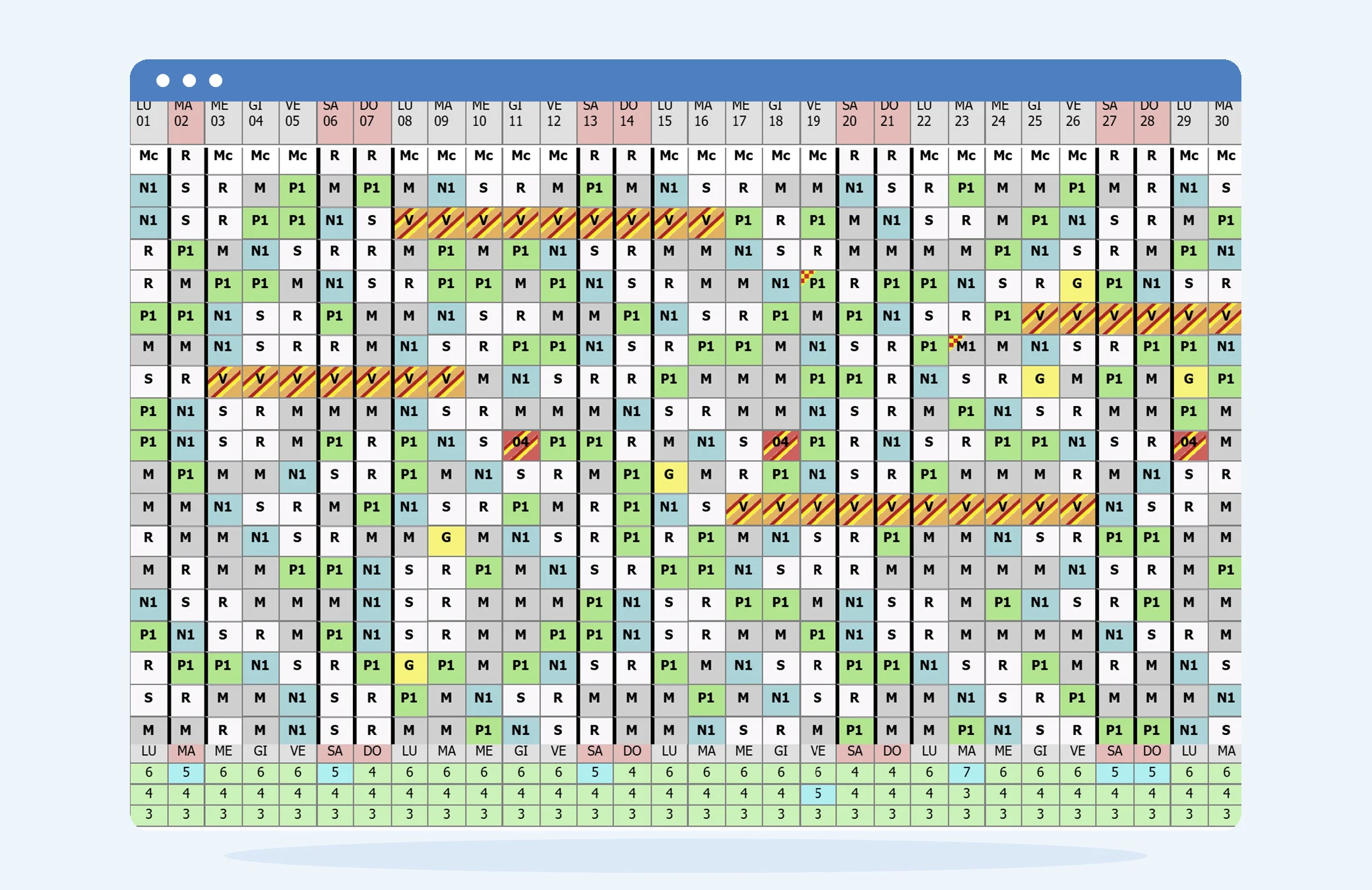
How the engine works (in 3 steps)
It reads the ward
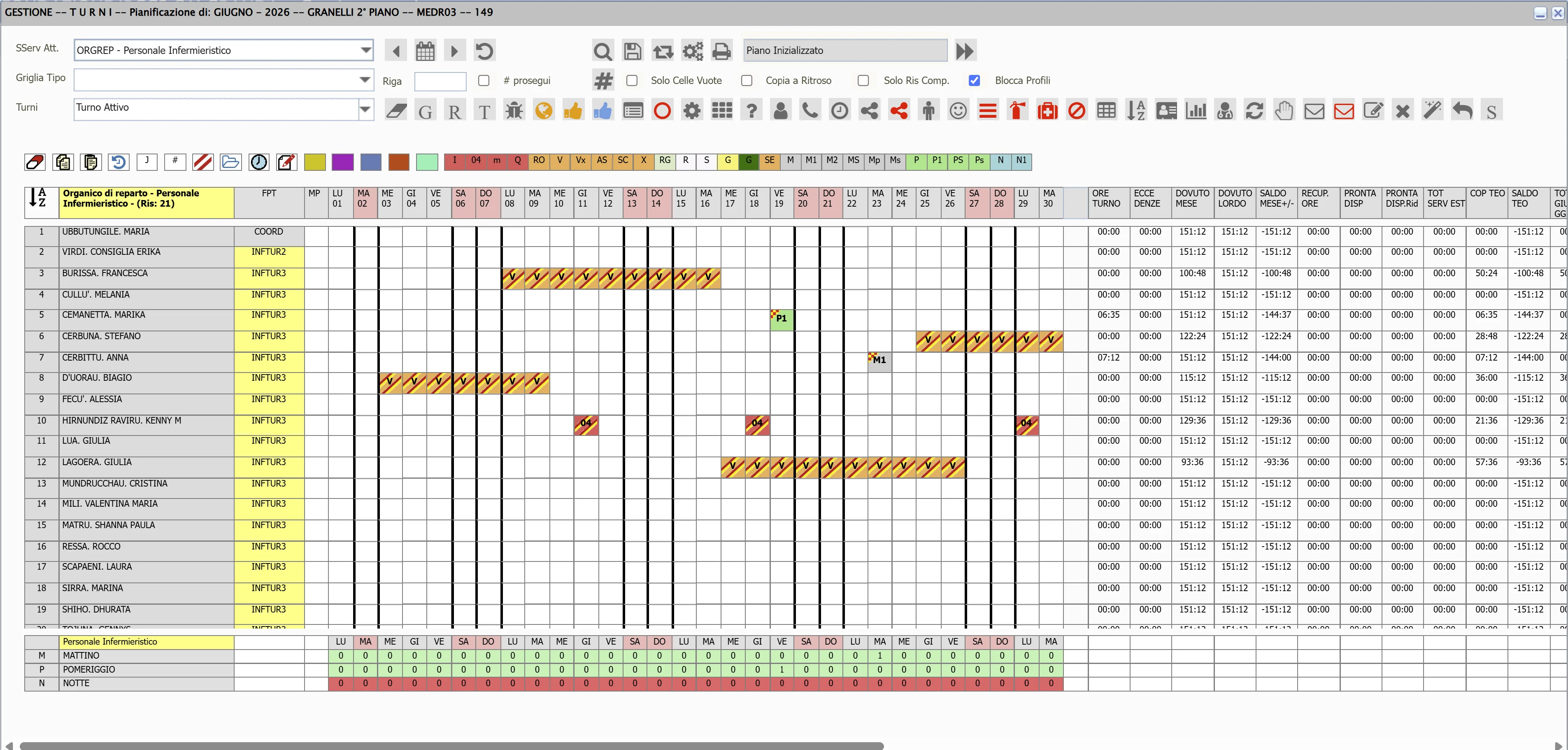
Shifts and periods (morning/day/afternoon/night), absences, competencies and skills, contracts (minimum and maximum days and minutes, rest periods), pre-assignments and prioritized requests, workteams and incompatibilities, MIN/OPT/MAX staffing levels: everything the planner already manages becomes input for the computation.
It respects and balances
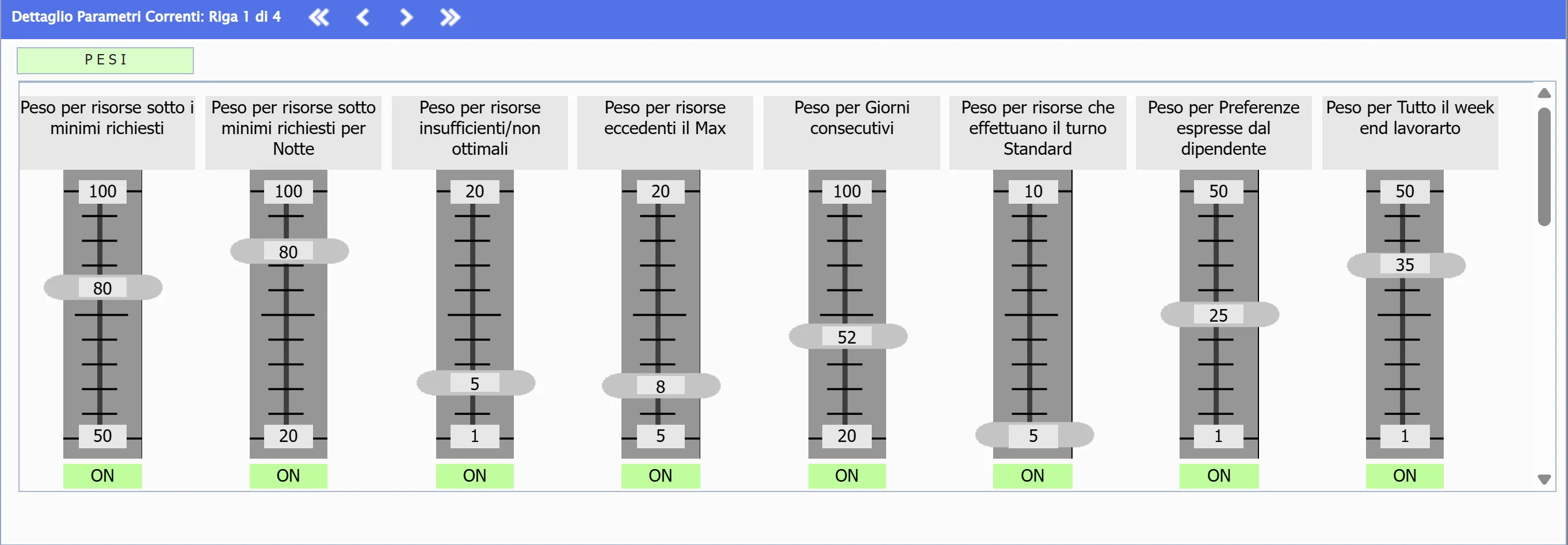
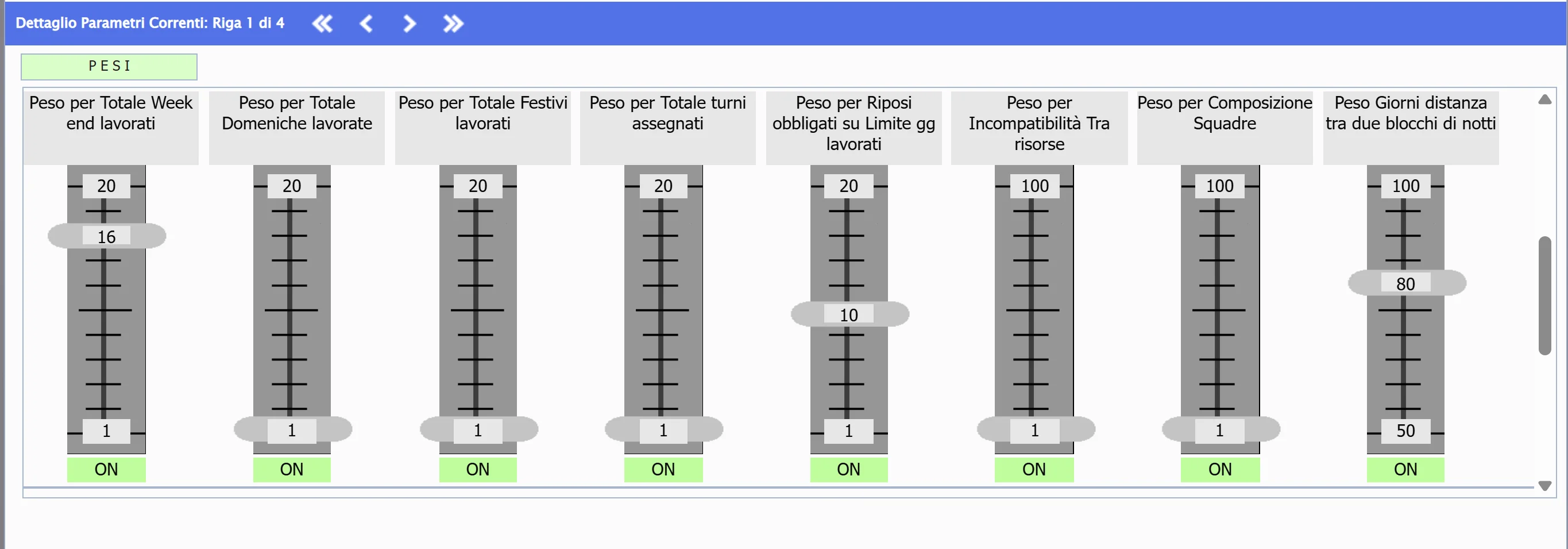
Hard constraints are never violated: rest-period regulations, the skills required per shift, contractual rules. Soft constraints are optimized: fairness in the distribution of on-call shifts, nights and standby availability, staff preferences, continuity of rest periods.
It proposes, it does not impose
The generated roster can be reviewed and edited before validation, with the checks always active. Configuration profiles are saved per rostering group: choices made once are reused every month. Computation is a centralized, asynchronous service: you launch it and keep working; if interrupted, it resumes where it left off.
The 4 planning modes (the engine is the fourth): Nurse rostering →
Promising AI is easy. We document it.
Many software products claim “artificial intelligence” for rostering. ALISEO ES shows you how its own works:
Born from research
The engine is the result of a research project with the University of Udine, promoted and funded by Windex: operations research applied to a real-world problem — the rosters of Italian hospital wards.
Published, not just promised
The method is described in a peer-reviewed scientific publication: Ceschia, Di Gaspero, Mazzaracchio, Policante, Schaerf — “Solving a real-world nurse rostering problem by simulated annealing”, Operations Research for Health Care 36 (2023), open access: anyone can read it, including your IT department.
Measured on public benchmarks
The approach was tested on the benchmarks of the international nurse rostering competitions (INRC), and the dataset of 34 real instances from 10 wards was made public: the results can be verified, not just cited.
Verifiable, even in tenders
A documented algorithm can be described, justified and verified: in tenders and procurement specifications — and with the European AI rules on the way — it is the difference between a ticked box and a credible answer.
Fairness you can see on the roster board
For staff, “optimized” above all means fair: on-call shifts, nights and standby availability distributed in a balanced way among colleagues, preferences accommodated when compatible, rest periods protected. The engine treats fairness as a computational objective, not a good intention — and the totals on the roster board make it visible and verifiable by everyone. Rosters perceived as fair mean fewer conflicts and more trust: a concrete lever for staff retention.
Governance and fairness for those who lead: For Management →
Frequently asked questions
How does automatic roster generation work?
The engine reads staffing needs (MIN/OPT/MAX), absences, competencies, contracts, preferences and incompatibilities of the rostering group and generates the monthly roster in a few minutes, respecting regulatory constraints and balancing fairness and preferences. The result can be reviewed and edited before validation.
What algorithm does ALISEO ES use?
A Simulated Annealing algorithm (operations research), born from a research project with the University of Udine promoted and funded by Windex and described in a peer-reviewed, open-access publication (Operations Research for Health Care, 2023).
Can I edit the generated roster?
Yes: the engine proposes, the planner decides. The generated roster can be reviewed and edited before validation, with compatibility checks always active.
Does the engine respect regulations and national collective agreements (CCNL)?
Yes, as hard constraints: rest periods, the skills required per shift and contractual rules are never violated. Before publication, the roster still goes through the pre-validation checks.
Does it need to be configured every month?
No: configuration profiles are saved per rostering group and reused every cycle. Computation is asynchronous — you launch it and keep working — and it resumes automatically if interrupted.
Further reading from the blog
Optimizing rosters with operations research: what Simulated Annealing is
What Simulated Annealing is and why ALISEO ES uses it to generate compliant, fair rosters in a few minutes: the research with the University of Udine.
Can generative AI do the ward’s rosters?
A generative AI produces a plausible roster board, but does not guarantee rest periods and staffing coverage: why rostering requires an optimization engine.
Want to see the engine generate your ward’s roster?
Pick the date and time of the demo, or write to us directly.
Book a demo